
|
|||||||
|
|||||||
|


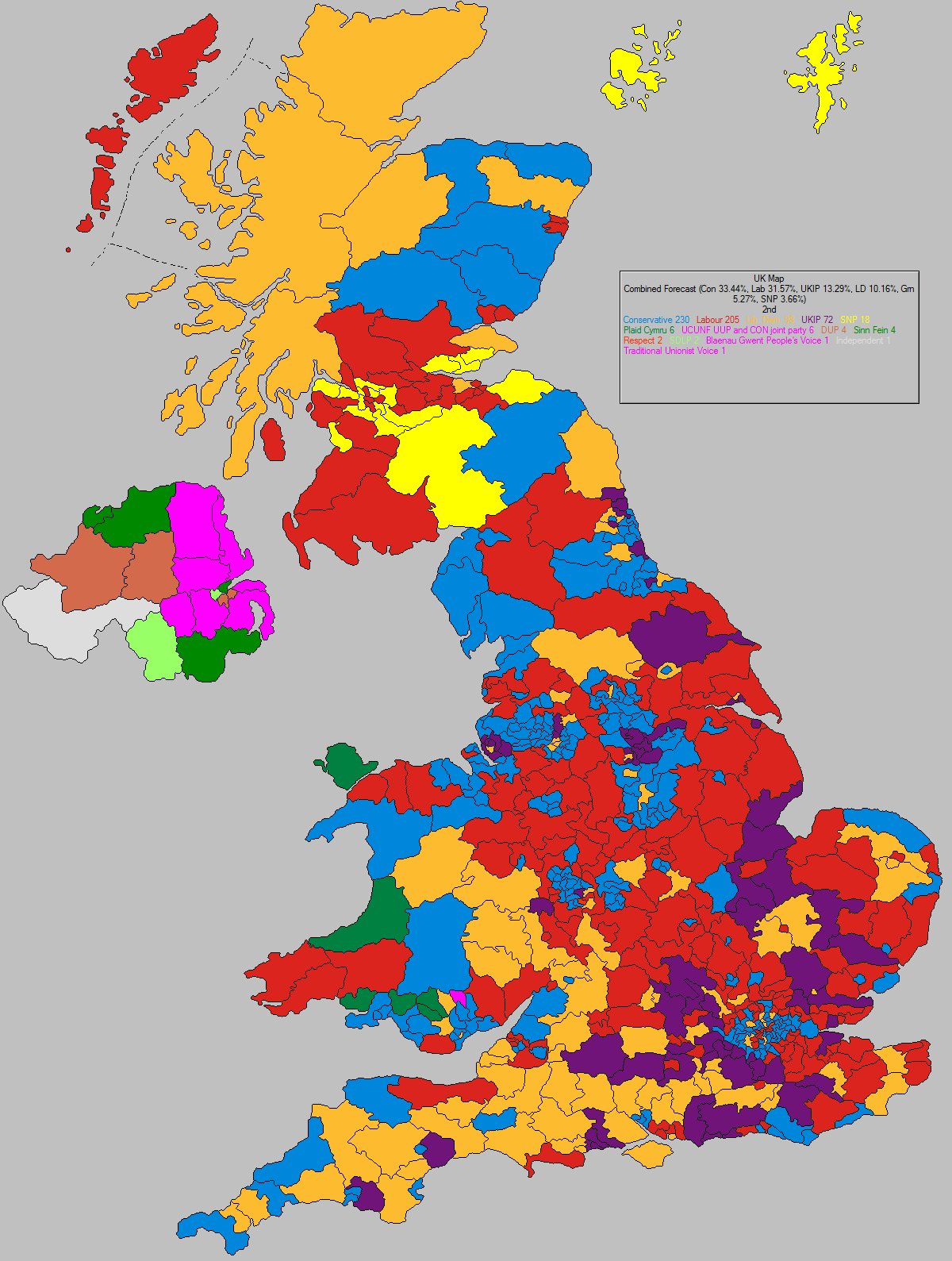
UK-Elect General Election Forecast, March 13th 2015.
Hung Parliament - Labour Short By 47 - Unstable Government = New Election?
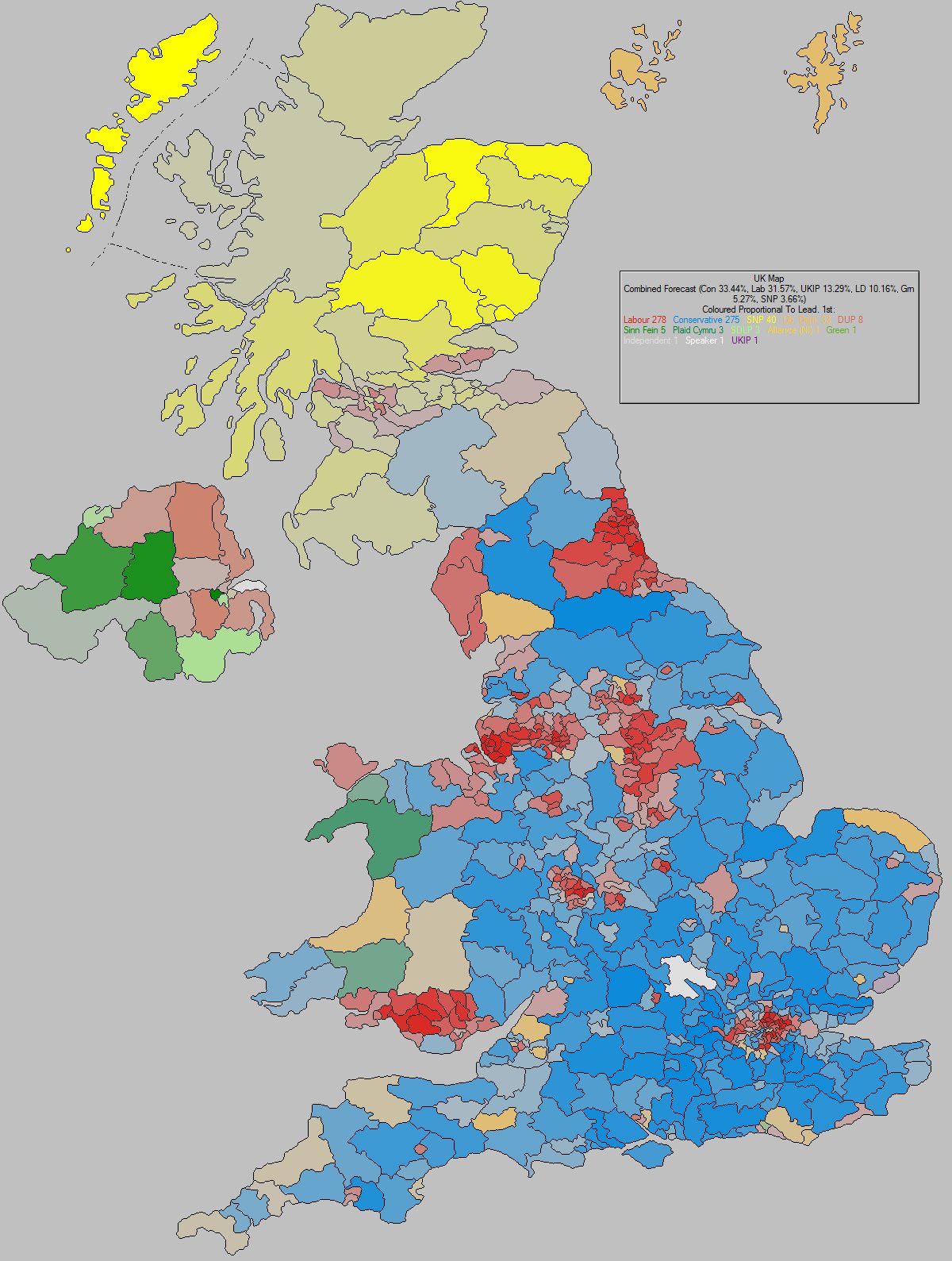
Labour is again forecast by UK-Elect to be the largest single party (although the margin is now very small), and the Scottish National Party is again forecast to have a key role in deciding who will form the next UK government - but there has been a major change since the last UK-Elect forecast: the combined total prediction of Labour + SNP MPs (318) would now not be enough to form a reliable, stable, coalition. If so, this could even lead to a second election within the same year..
The support (or at least guaranteed abstention) of additional MPs would be required. The reason for this change since the previous forecast is twofold - a small, but potentially significant swing from Labour to the Conservatives shown in the polls, coupled with a small, but again significant, change in methodology. The "adjust target percentages when forecasting" option is set to take account of the election date - i.e. the percentages used for this forecast represent what we currently expect to happen on May 7th, rather than just using the current poll percentages as a target. This has the affect of adjusting the input opinion poll percentages to take account of what happened in many past elections as the date of the election approached - i.e. that the support levels for the parties returned part-way towards their previous totals.
The margins, however, are very narrow and a lot can still change before May 7th...
This forecast was done using UK-Elect v9.3 functionality. The method chosen this time was a highly modified form of Uniform National Swing, but combining separate forecasts for Scotland, Wales, London and GB, and using the latest by-elections, constituency opinion polls and known candidate lists as part of the input. Incumbency support was enabled, and each constituency calculation was influenced by whether the previous winner was known to be standing again, standing down,or the situation is not yet known. Different incumbency calculations were used for each party. Tactical voting was disabled as it is not clear to what extent it will occur in May. Multiple iterations were used to better achieve the correct target percentages.
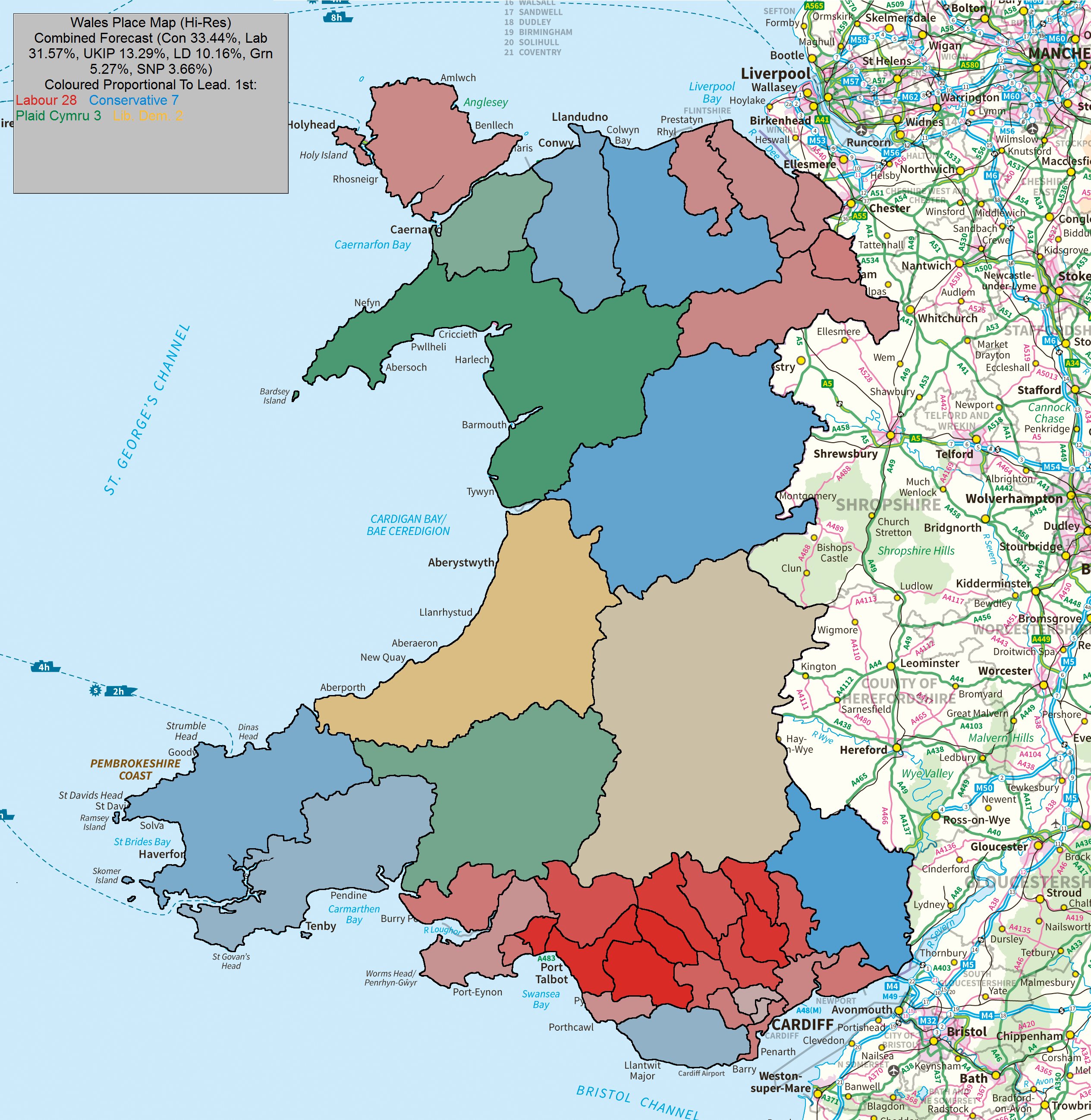
The GB percentages input for this forecast were Con 33%, Lab 32%, UKIP 15%, Lib Dem 8%, Green 6%. For Scotland the percentages used were SNP 45%, Lab 28%, Con 14%, Lib Dem 4%, UKIP 4%, Green 4%, for Wales the percentages used were Lab 39% Con 25%, UKIP 14%, Plaid Cymru 10%, Green 6%, Lib Dem 5%, and for London the percentages used were Lab 43%, Con 33%, UKIP 10%, Lib Dem 7%, Green 6% Other parties votes were not specifically set. Note that the final forecast percentages differ from the input percentages due to the methodology used (including adjusting for the number of days until the election) - e.g. the final UK target percentages used were Con 33.44%, Lab 31.57%, UKIP 13.29%, LD 10.16%, Green 5.27%.
|
|
||||||||||||||||||||||||||||||||||||||||||||||||||



| Additional UK-Elect generated maps and screenshots | |||
|---|---|---|---|
 |
 |
 |
|
 |
 |
 |
|
| Hover cursor over map for more information, click on image to enlarge | |||
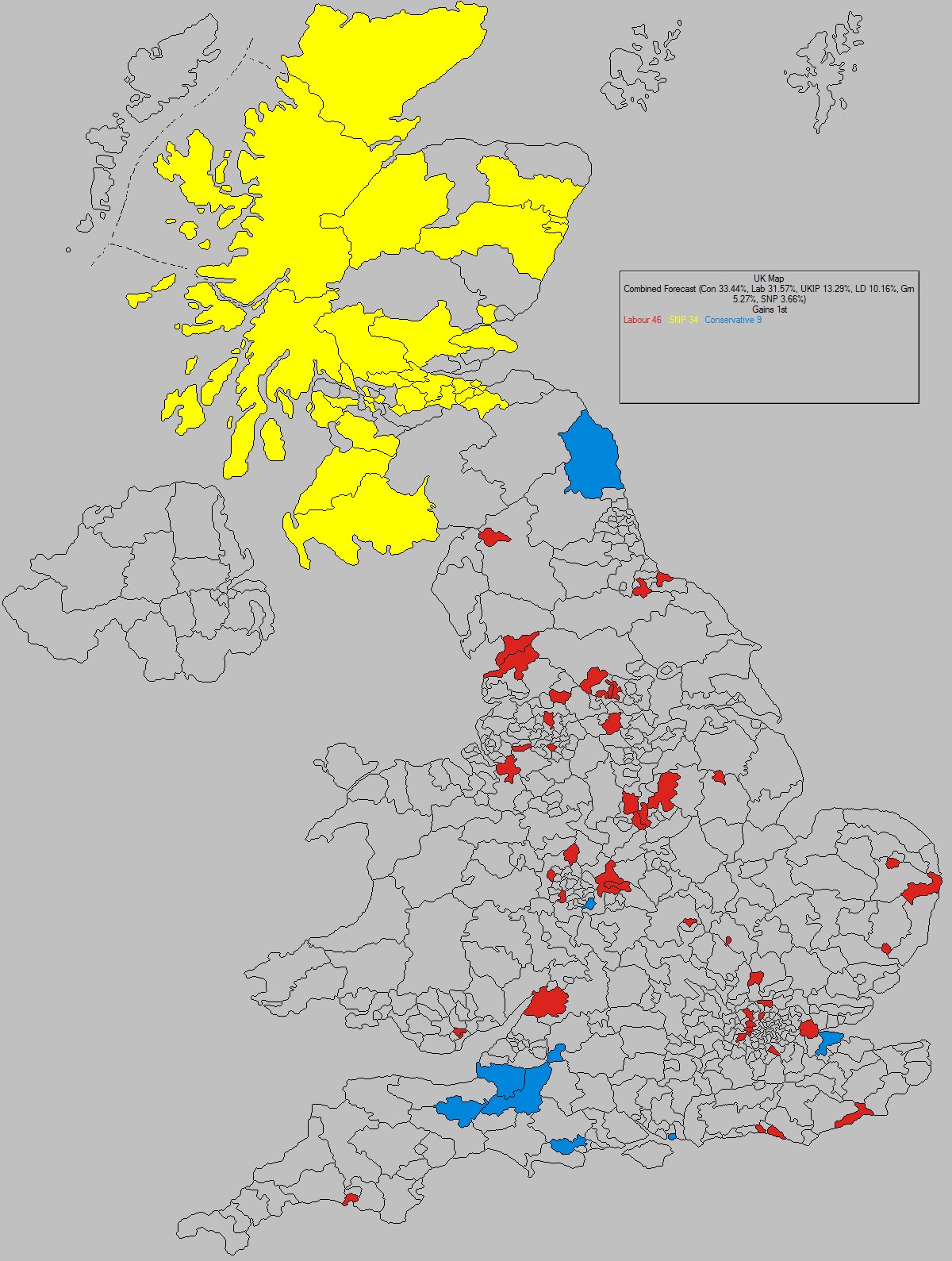
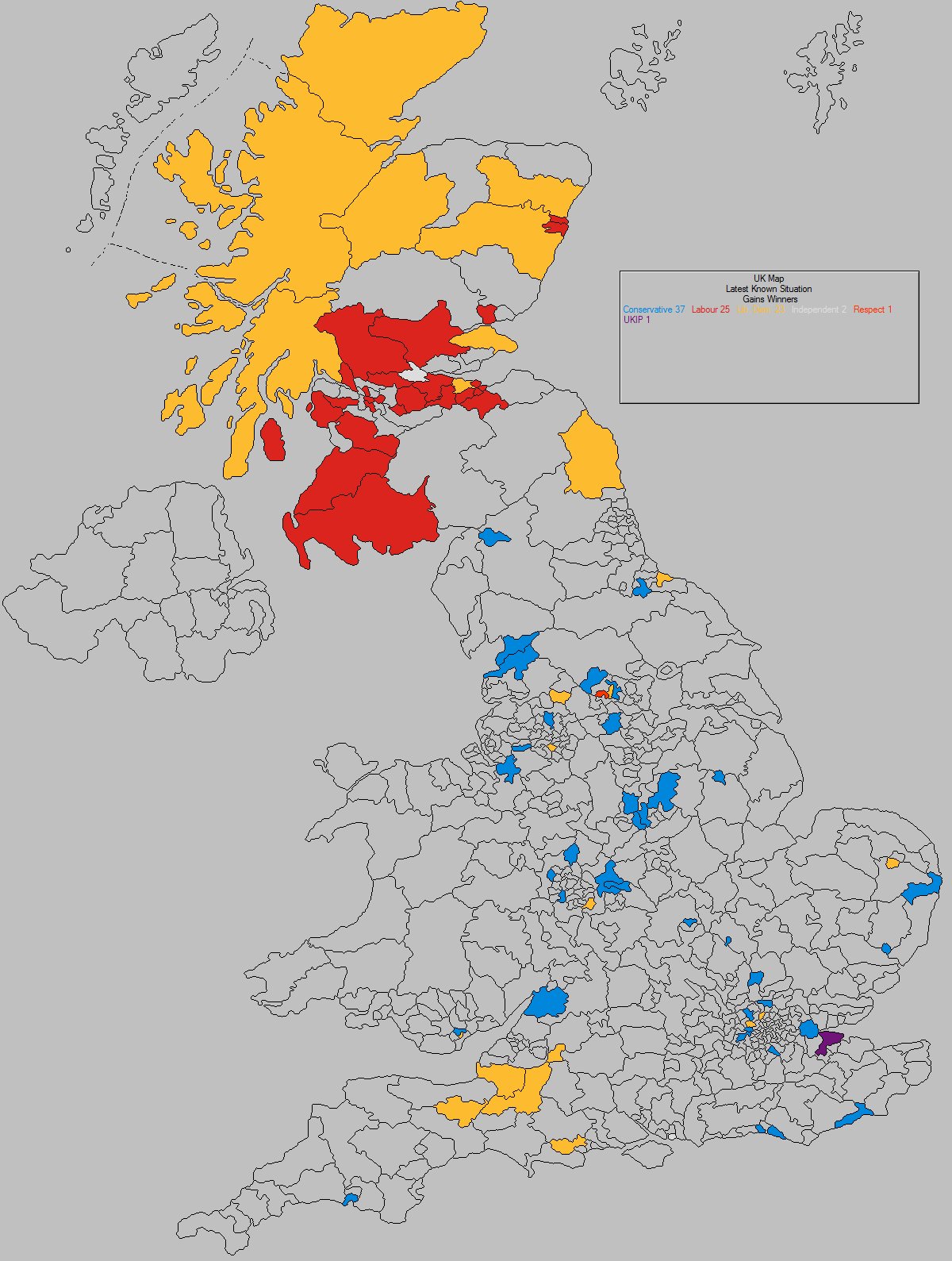
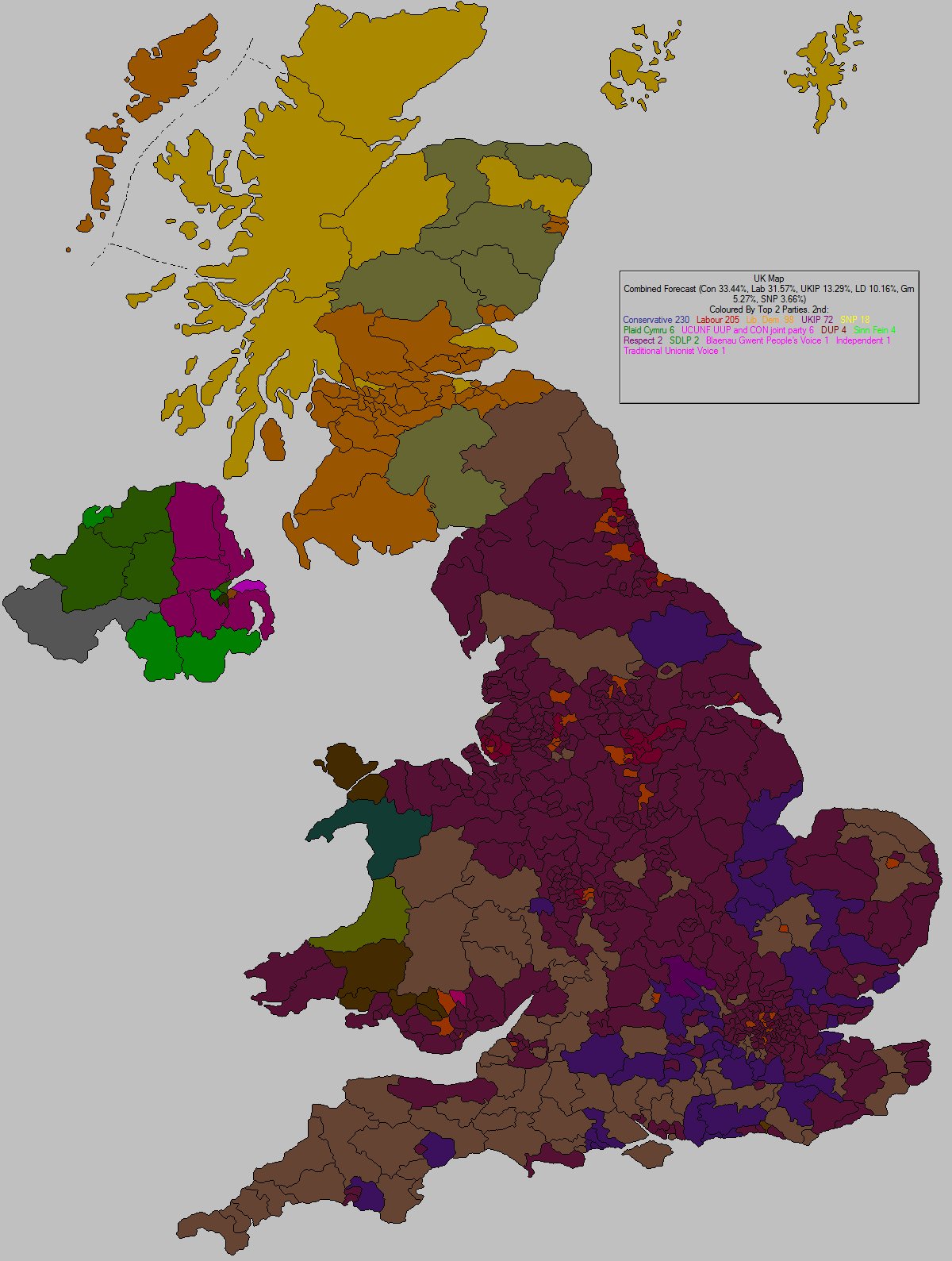
Notes: The forecast base was the 2010 General Election, although gains are compared with the current situation (March 2015). The forecasting was based on a highly modifed form of Uniform National Swing, but the forecast was made on a separate regional basis for Scotland, Wales, London, and Great Britain, with many other factors taken into consideration, including the number of days until the election, by-election results, local constituency opinion polls, and enhanced support for incumbent parties. Options to compensate for some of the oddities of UNS were also set - e.g. to prevent the forecasting of negative vote totals. Extra incumbency support was enabled based on additional party and candidate-specific weightings (the latest available candidate lists were used as part of the forecast and consideration was given to whether the sitting MP was standing again or standing down, as well as which party he or she belongs to).
See UK Election Forecasting Theory, Techniques and Controversial Discussions and UK Election Forecasting - A detailed explanation of the techniques used by UK-Elect for more details of UK-Elect forecasting techniques, or if you have a Windows-based PC then try some forecasting yourself using the UK-Elect Trial Version
UK-Elect v9.3 users will be able to reproduce the above forecast (if they are quick!) by doing a "Guided Forecast" and specifying the separate percentages for Scotland, Wales, London and the overall GB percentages. Note that the method used was Uniform National Swing, but with the additional default UK-Elect settings for that method enabled. Incumbency support and date-specific adjustments (adjusting the calculation target percentages depending on the number of days until the election) were used for this forecast, but tactical voting was disabled.
Results from Northern Ireland are based on those of the last election and included for completeness only.Suggestions and Corrections: UK election forecasts are sometimes very controversial. To notify us of any suggested change to this one, or to let us know of any part of it that is just dead wrong, please email us on support@ukelect.co.uk.Subscribe to our forecast email updates here